
Clear View Systems handles multi-channel rate management well enough for many bureaux de change, but it is not the only option. If you are evaluating clearviewsys.com alternatives for a currency exchange or money service business in Central Europe, the strongest contenders are Currexchanger, Monetor, Currencycloud, Cornerstone, Infinity International, XE, and Moneycorp. Each takes a different approach to compliance, integration, and scale. The comparison below cuts through the noise.
| Platform | Target Market | Core Functionality | AML/KYC Integration | Scalability | Pricing Model |
|---|---|---|---|---|---|
| Currexchanger | Central Europe, multi-branch operators | Transaction management, rate control, AML/KYC, cash monitoring | External AML/KYC providers, banknote verification | Single office to large networks | Not publicly listed |
| Monetor | European MSBs | FX operations, compliance reporting | Built-in compliance modules | Modular, mid-market | Not publicly listed |
| Currencycloud | Global, fintech-focused | Cross-border payments, multi-currency wallets | API-driven KYC | High, enterprise-grade | Subscription plus transaction fees |
| Cornerstone | UK and European banks | Treasury, FX risk management | Integrated compliance | Enterprise | Custom licensing |
| Infinity International | Global wholesale FX | Banknote trading, inventory management | Regulatory reporting | Wholesale-focused | Not publicly listed |
| XE | Global, retail and business | Rate data, currency conversion | Basic compliance | Limited for MSBs | Freemium and API tiers |
| Moneycorp | UK and European businesses | FX payments, hedging | Standard KYC | Mid-market | Not publicly listed |
Table of Contents
- What are the best ClearviewSys alternatives for MSB operations?
- How to choose the best currency exchange management software
- Currexchanger: built specifically for currency exchange operators
- What does implementation actually look like?
- Key Takeaways
- Currexchanger is the direct-to-operator alternative
- FAQ
What are the best ClearviewSys alternatives for MSB operations?
The platforms worth serious consideration each solve a distinct piece of the MSB puzzle, and no two are interchangeable.
Monetor targets European money service businesses with built-in compliance reporting and FX operations tools. Its strength is simplifying regulatory workflows for mid-market operators who cannot afford a dedicated compliance team.
Currencycloud is built for fintechs and businesses that need to move money across borders at volume. Its API-first design means developers can embed multi-currency wallets and payment flows directly into existing products. Compliance leans on API-driven KYC rather than a native back-office module, so it suits tech-forward teams more than traditional bureaux de change.

Cornerstone sits firmly in the enterprise tier, serving banks and large FX desks with treasury and risk management tools. Implementation is complex and licensing is custom, which prices out smaller operators.
Infinity International focuses on wholesale banknote trading and distribution. If your business moves physical currency at scale, its inventory and regulatory reporting tools are purpose-built for that workflow. Retail-facing bureaux de change will find it over-specified.
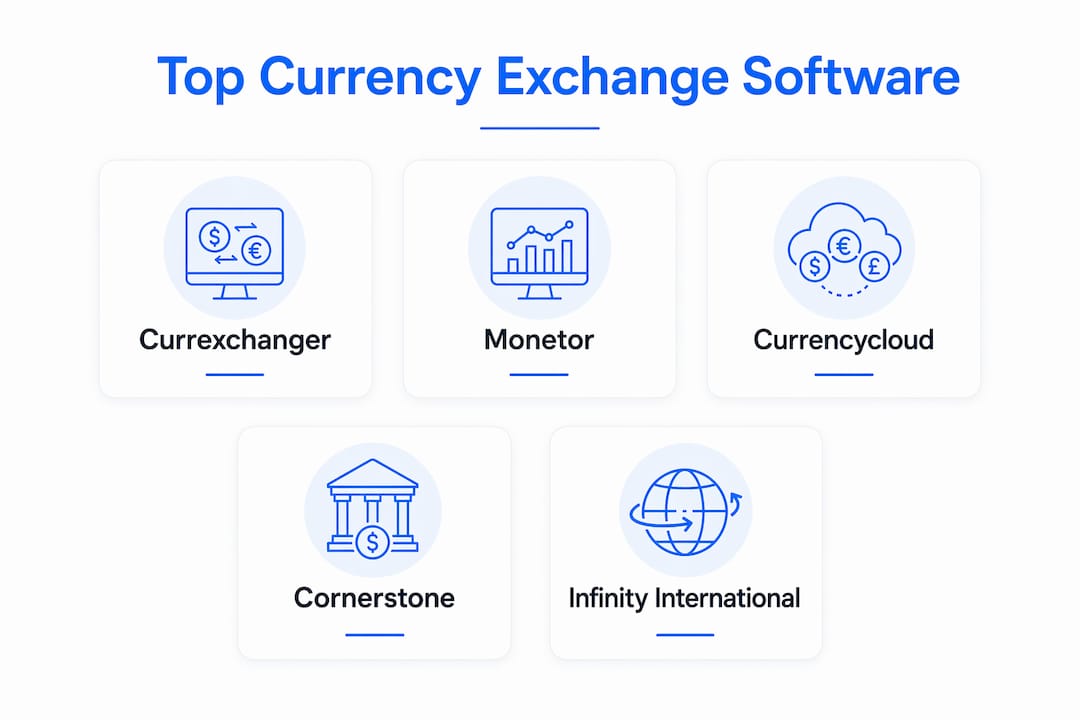
XE is best understood as a rate data provider that has expanded into business FX. Its compliance depth is limited compared to dedicated MSB platforms, making it a better fit for businesses that need rate feeds than for operators managing full AML obligations.
Moneycorp covers FX payments and hedging for mid-market businesses. It handles standard KYC but lacks the deep operational automation that multi-branch currency exchange operators need day to day.
For compliance-heavy operations, automated regulatory reporting from platforms like Alessa demonstrates how auto-populated SARs, CTRs, and STRs can cut hours of manual entry each week. That benchmark is worth holding any shortlisted platform against.
Industry experts recommend a unified rate engine approach that combines point-of-sale, rate publishing, and compliance reporting in one interface, because splitting those functions across separate tools creates reconciliation gaps and audit risk.
How to choose the best currency exchange management software
Start with your compliance obligations, not your feature wish list. AML and KYC requirements in Central Europe are non-negotiable, and a platform that cannot generate audit-ready reports automatically will cost you more in staff time than it saves anywhere else.
Key buying criteria:
- Compliance coverage: Does the platform auto-generate and submit regulatory reports across your jurisdictions? Composable AML architectures that support modular onboarding, continuous screening, and customer due diligence reduce workload without sacrificing coverage.
- Integration ease: Look for open APIs that connect to your existing accounting software, payment processors, and external AML/KYC providers. Closed systems create data silos.
- Scalability: A platform that works for one branch should grow with you to ten without a full re-implementation. Modular designs handle this better than monolithic ones.
- Total cost of ownership: Subscription fees are only part of the picture. Factor in implementation, training, ongoing support, and any customization charges before comparing sticker prices.
- Support quality: Decision-makers consistently cite responsive customer service and clear compliance guidance as top factors in platform satisfaction. Ask vendors for their average response time and escalation process before signing anything.
Pro Tip: When switching platforms, treat historical transaction data as a compliance asset, not a migration afterthought. Gaps in your audit trail can trigger regulatory scrutiny during AML reviews. Require any vendor to provide a documented data-mapping roadmap and confirm bulk import of legacy records before you commit.
Practical evaluation steps: request a live product demo with your actual transaction volume, negotiate a trial period with real data, and speak directly to two or three reference customers in your market segment.
Currexchanger: built specifically for currency exchange operators
Currexchanger is designed from the ground up for currency exchange businesses managing multiple offices or branches, which separates it from general-purpose payment platforms that treat FX as one feature among many.
The platform automates currency transactions, balance monitoring, and document verification, covering the daily operational load that ties up staff in manual processes. Rate control is centralized, so every branch publishes consistent pricing without manual updates. AML/KYC compliance is built in and connects to external providers, meaning your compliance stack does not require a separate vendor relationship.
Core capabilities:
- Real-time transaction management and exchange rate control across all branches
- Integrated AML/KYC with connections to external compliance and banknote verification providers
- Cash and inventory monitoring with automated balance tracking
- Customizable dashboards and report generation for performance and risk assessment
- API connectivity to accounting systems and payment platforms
- Multi-factor authentication, detailed activity logs, and geographic or IP-based access restrictions
Security architecture is worth calling out specifically. Geographic access restrictions and IP-level controls mean that even if credentials are compromised, unauthorized access from outside approved locations is blocked. That layer of protection matters when staff turnover is high or when branches operate across different countries.
Currexchanger also offers tailored module development and marketing support, so operators are not locked into a fixed feature set as their business grows. For operators looking to scale currency exchange operations across multiple locations, that flexibility is a practical advantage over platforms with rigid licensing tiers.

What does implementation actually look like?
Most currency exchange software implementations fall into a range of a few weeks to several months, depending on the number of branches, the complexity of existing data, and how much customization the operator needs.
The onboarding process typically runs in three phases. First, data migration: your historical transaction records, customer profiles, and rate history move into the new system. This phase carries the highest compliance risk, because any gap in the audit trail creates a problem during regulatory review. Second, configuration: rate engines, compliance rules, user access levels, and integrations with external providers get set up and tested. Third, staff training and go-live: front-desk staff and compliance officers learn the new workflows, usually through a combination of vendor-led sessions and documentation.
Platforms with open APIs and documented data-mapping tools shorten the first phase considerably. The accounting integration process is often the longest single task, particularly when the existing accounting system uses a proprietary data format. Vendors who assign a dedicated implementation manager, rather than routing everything through a general support queue, consistently deliver faster go-lives.
Key Takeaways
Currexchanger and the platforms reviewed here each address a distinct segment of the currency exchange software market, with compliance depth and integration flexibility as the sharpest points of differentiation.
| Point | Details |
|---|---|
| Compliance is the baseline | Any platform you choose must auto-generate AML reports and connect to external KYC providers without manual workarounds. |
| Unified rate engines reduce risk | A single rate engine publishing across branch, web, and API channels eliminates pricing inconsistencies and audit gaps. |
| Migration needs a data-mapping plan | Historical transaction data and audit trails must transfer intact; require a documented roadmap from any vendor before signing. |
| Total cost goes beyond the license fee | Factor in implementation, training, support, and integration costs when comparing platforms on price. |
| Currexchanger fits multi-branch operators | Its purpose-built design for currency exchange businesses, with integrated AML/KYC and branch-level controls, suits Central European operators scaling across locations. |
Currexchanger is the direct-to-operator alternative
Most platforms reviewed here were built for fintechs, banks, or global payment networks and adapted for currency exchange as a secondary use case. Currexchanger was built the other way around.
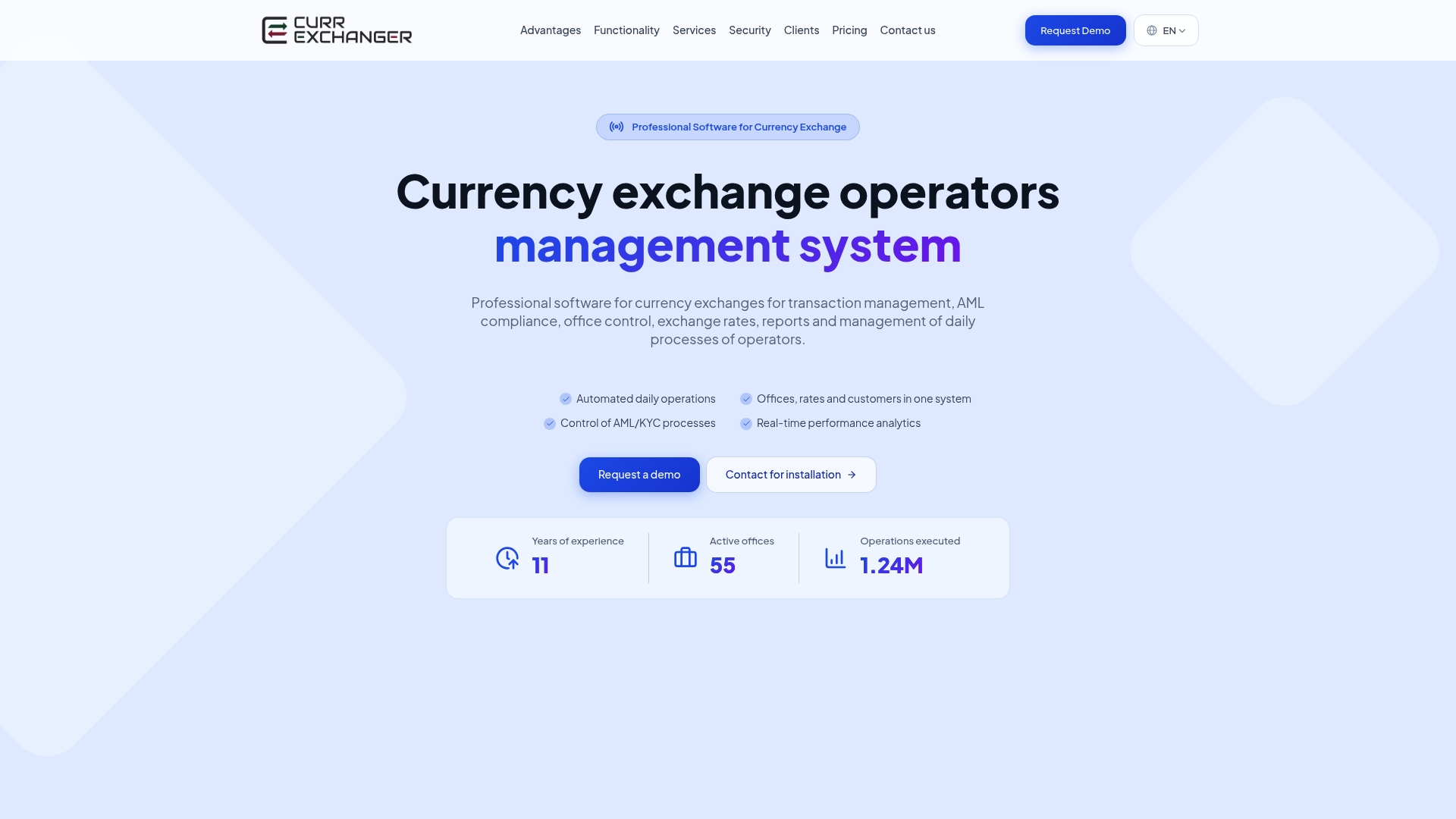
For bureaux de change and multi-branch currency exchange operators in Central Europe, Currexchanger delivers the operational specificity those other platforms lack: branch-level rate control, integrated AML/KYC, banknote verification, and security controls designed for distributed teams. There is no need to bolt compliance onto a payments platform or customize a banking system to fit your workflow. The fintech-as-a-service market is expanding rapidly, and purpose-built modular platforms are where operators find the best fit between cost and capability. You can explore Currexchanger's full feature set and request a demo at currexchanger.com.
FAQ
What is Clear View Systems used for?
Clear View Systems is a currency exchange platform that manages real-time rate publishing across branch, web, and API channels, with audit trail and compliance reporting tools for money service businesses.
Which ClearviewSys alternative is best for multi-branch operators?
Currexchanger is purpose-built for multi-branch currency exchange operators, with centralized rate control, integrated AML/KYC, and branch-level security controls designed for Central European markets.
How long does it take to switch currency exchange software?
Implementation typically takes several weeks to several months, depending on branch count, data complexity, and integration requirements. The data migration phase carries the highest compliance risk and requires a documented audit trail handover.
Do ClearviewSys alternatives support AML and KYC compliance?
Most do, but depth varies. Platforms like Currexchanger and Alessa offer automated regulatory report generation and external KYC provider integrations, while rate-focused tools like XE provide only basic compliance coverage.
What should I ask a vendor before switching platforms?
Ask for a documented data-mapping roadmap for legacy records, a reference customer in your market segment, and a clear breakdown of total cost including implementation, training, and support fees.