
What are the top DCSorg.com alternatives for Central Europe?
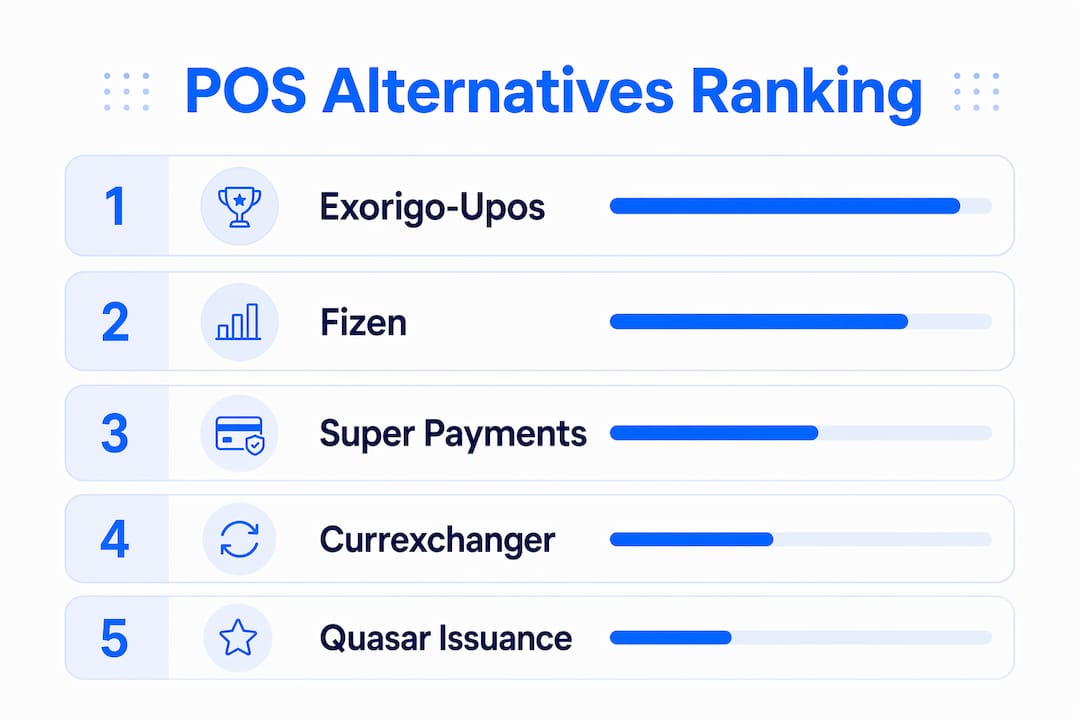
The strongest dcsorg.com alternatives for Central European financial businesses are Exorigo-Upos, Fizen, Super Payments, Scalapay, and Lightspeed Retail. Each address a gap that DCSorg.com leaves open in this market: regional compliance, PSD2-ready open banking, or hybrid payment channel support. The table below covers all 20 options across the dimensions that matter most to financial service operators.
| Product | Best For | POS & Payment Features | Central Europe Availability | Compliance & Security | Integration |
|---|---|---|---|---|---|
| Exorigo-Upos | Large-scale retailers in Central Europe | Cloud EFT, Flex POS, omnichannel | Poland, Romania, Czech Republic, Slovakia, Ukraine | Certified P2PE, PSD2 | On-site service network, 400+ technicians |
| Alleviate Financial Solutions | Compliance-focused institutions | Payment processing, compliance tools | Limited regional data | PSD2, AML integration | API connectivity |
| Transworld Systems | Collections + payment POS | Collections, payment recovery | Limited regional data | Standard compliance | Combined collections platform |
| Resolvion | Complex transaction workflows | Dispute management, transaction tools | Limited regional data | Standard compliance | Workflow API integration |
| ShopKeep POS | Small retail businesses | Basic retail POS | Limited in Central Europe | Standard PCI | Third-party integrations |
| Rezku POS Software | Hospitality and retail | Modular POS, flexible pricing | Limited regional data | Standard PCI | Modular API design |
| NetSuite for Retail | Enterprise back-office | ERP + POS integration | Available via cloud | SOC 2, standard compliance | Full ERP suite |
| Absolute Resolutions | Card program management | Card issuance, lifecycle management | Limited regional data | White-label stack | Card issuance API |
| First Credit Services | Consumer credit institutions | Credit management, POS integration | Limited regional data | Consumer credit compliance | Credit API |
| Total CollectR | Collection efficiency | Collections + POS integration | Limited regional data | Standard compliance | Collections API |
| Super Payments | Payment automation | Open banking, scheduled payments | Growing in Central Europe | PSD2-compliant | Bank API, open banking |
| Stocard (A Klarna Group Company) | Mobile wallet retailers | Digital wallet, Klarna integration | Available across EU | PSD2, Klarna compliance | Wallet API |
| Scalapay | Installment payment retailers | Buy now, pay later, POS integration | Available in EU markets | PSD2 | POS and merchant API |
| Jaja Finance | Consumer lending markets | Digital credit, payment platform | Limited regional data | Consumer finance compliance | Lending API |
| Sati | API-driven payment processing | Bank API payments, POS integration | Limited regional data | PSD2 | Bank API connectivity |
| Epos Now | Small to medium cloud POS | Cloud POS, app ecosystem | Available via cloud | PCI DSS | App marketplace |
| Revel iPad POS | Mobile-friendly retail | iPad POS, real-time reporting | Available via cloud | PCI DSS | Payment and reporting API |
| Lightspeed Retail | Omnichannel retailers | Multi-channel POS, inventory | Available across EU | PCI DSS | Multi-channel API |
| Shopify POS | Online + physical retail | Unified ecommerce + POS | Available across EU | PCI DSS | Shopify ecosystem |
| UpKeep | Operations + maintenance | Asset tracking, limited POS | Available via cloud | Standard compliance | Maintenance API |
How do these alternatives compare on features, pricing, and compliance?
DCSorg.com has served the U.S. alternative financial services market for over 30 years, with a modular POS platform built around check cashing, bill payment, and BSA/AML reporting. Its core strength is deep U.S. regulatory alignment. The gap for Central European operators is real: DCSorg.com's compliance posture targets U.S. regulators, not PSD2 or local AML frameworks in Poland, the Czech Republic, or Romania.
Here is where the leading alternatives pull ahead:
- Exorigo-Upos operates a certified P2PE network across five Central European countries with 400+ on-site technicians, making it the only option on this list with a true regional service infrastructure.
- Fizen connects to 200+ banks across CEE with PSD2-compliant open banking, automated KYC, and bulk payment tools built specifically for the local market.
- Super Payments and Sati both prioritize bank API connectivity and PSD2 compliance, useful for businesses that need payment initiation without a full POS overhaul.
- Scalapay and Stocard address the consumer-facing payment layer: installment options and digital wallet integration, respectively, both available across EU markets.
- NetSuite for Retail suits larger organizations that need ERP-level back-office integration alongside POS, though its pricing reflects enterprise positioning.
- Lightspeed Retail and Shopify POS cover omnichannel retail well, with strong EU availability and solid PCI DSS compliance, but neither offers the financial-services-specific AML or KYC tooling that Central European regulators expect.
Pro Tip: When evaluating compliance fit, ask vendors specifically whether their AML reporting maps to your national regulator's format, not just whether they claim "PSD2 compliance." The two are not the same requirement.
Pricing across this field varies widely. Exorigo-Upos, Fizen, and Quasar Issuance do not publish standard rate cards; pricing is project-based. Epos Now, Lightspeed, and Shopify POS publish tiered subscription plans. Scalapay charges merchants a per-transaction fee rather than a monthly license.

Why do financial businesses switch away from DCSorg.com?
The most common driver is geography. DCSorg.com is built for U.S. check cashers and money service businesses, and its compliance and support infrastructure reflects that. A currency exchange operator in Warsaw or Bratislava gets a product designed for a different regulatory environment.
Beyond geography, three operational gaps come up repeatedly:
- No PSD2-native architecture. Central European regulators require open banking connectivity that DCSorg.com does not natively provide.
- Limited regional support. DCSorg.com offers U.S.-based technical support. For businesses in Central Europe, time zone gaps and language barriers create real friction during incidents.
- Vendor fragmentation. Businesses that need card issuance, AML reporting, and POS in one stack often end up stitching together DCSorg.com with separate vendors, increasing both cost and security exposure.
Pro Tip: During any proof-of-concept, test offline transaction processing under a simulated network outage. POS platforms with offline-first capability process transactions independently and sync later, which prevents revenue loss in high-traffic environments where connectivity drops.
How do you choose the right alternative for your business?
Start with your regulatory environment, not your feature wishlist. A business operating under Polish or Czech AML law needs a vendor whose compliance tools map to those specific frameworks, not a generic "AML-ready" claim.
Key criteria to evaluate:
- PSD2 and local AML alignment: Confirm the vendor's compliance certifications cover your national regulator's requirements, not just EU-level directives.
- API-first architecture: PSD2-compliant platforms with direct bank API connectivity give you real-time transaction oversight and automated KYC, both of which reduce manual compliance work.
- Hybrid payment channel support: Your platform should handle cash, card, and mobile wallet transactions under one system. Businesses that manage diverse payment channels through a single platform avoid the data reconciliation problems that come with siloed tools.
- Regional support network: Vendors with on-site technicians in your country resolve hardware and integration issues faster than remote-only support.
- Migration timeline: Ask vendors for a realistic onboarding estimate specific to your transaction volume and existing system architecture, not a generic "weeks" answer.
For currency exchange operators specifically, look for platforms that include exchange rate management, multi-currency position tracking, and banknote verification integration alongside standard POS features.
What does DCSorg.com actually offer, and where does it fall short in Central Europe?
DCSorg.com, operated by Digital Currency Systems, provides a modular POS platform for alternative financial services. Its core products include DCS CashSpot, Check Cashing Pro, and DCS Merchant, covering check cashing, bill payment, pre-paid debit cards, money orders, and money transfers.
Key facts about its current positioning:
- Over 30 years of experience serving U.S. check cashers and money service businesses
- Built-in BSA/AML reporting aligned to U.S. regulatory requirements
- Dedicated U.S.-based technical support
- Pricing available on inquiry only; no published rate card
The platform's limitations for Central European operators are structural. BSA/AML reporting does not substitute for PSD2 compliance. U.S.-based support does not cover Central European time zones or languages. And the product's design around check cashing, a service category far less common in Central Europe, means many features are simply irrelevant to operators in the region.
What Central European operators need to know about local compliance
PSD2 and P2PE certification are the baseline requirements for any payment or POS solution operating in Central Europe. PSD2 governs open banking access and strong customer authentication. P2PE protects cardholder data from the point of card interaction through decryption, reducing PCI DSS scope for merchants.
Regional trust signals to verify before signing any vendor contract:
- National-level AML certification or regulatory approval in your country of operation
- P2PE certification from a recognized payment security assessor
- Local language support and documentation
- Integration with your country's dominant digital wallet ecosystem
- References from businesses operating under the same national regulator
Fizen's open banking platform operates across seven CEE countries with unified security standards and automated KYC, making it one of the few vendors purpose-built for this regulatory environment. Exorigo-Upos adds the physical layer: certified P2PE terminals and an on-site service network across Poland, Romania, Czech Republic, Slovakia, and Ukraine.
How long does switching to an alternative actually take?
Implementation timelines vary by vendor and complexity. Cloud-based POS platforms like Epos Now or Shopify POS can be operational in days for simple retail setups. Financial-services-specific platforms with AML integration, card issuance, and multi-branch architecture typically require 6–16 weeks from contract to live operation.

The longest phase is usually data migration and staff training, not technical setup. Vendors with dedicated onboarding teams and localized documentation cut this time substantially. Exorigo-Upos, for example, deploys through its regional service network, which reduces the coordination overhead that remote-only vendors require. Ask any shortlisted vendor for a project plan with named milestones before you commit.
Currexchanger: a different approach for currency exchange operators
If your business is a currency exchange operation rather than a general financial services merchant, the platforms compared above may not be the right fit. Most are built for retail POS or payment processing, not for the specific workflows of a Bureau de Change or multi-branch forex operator.
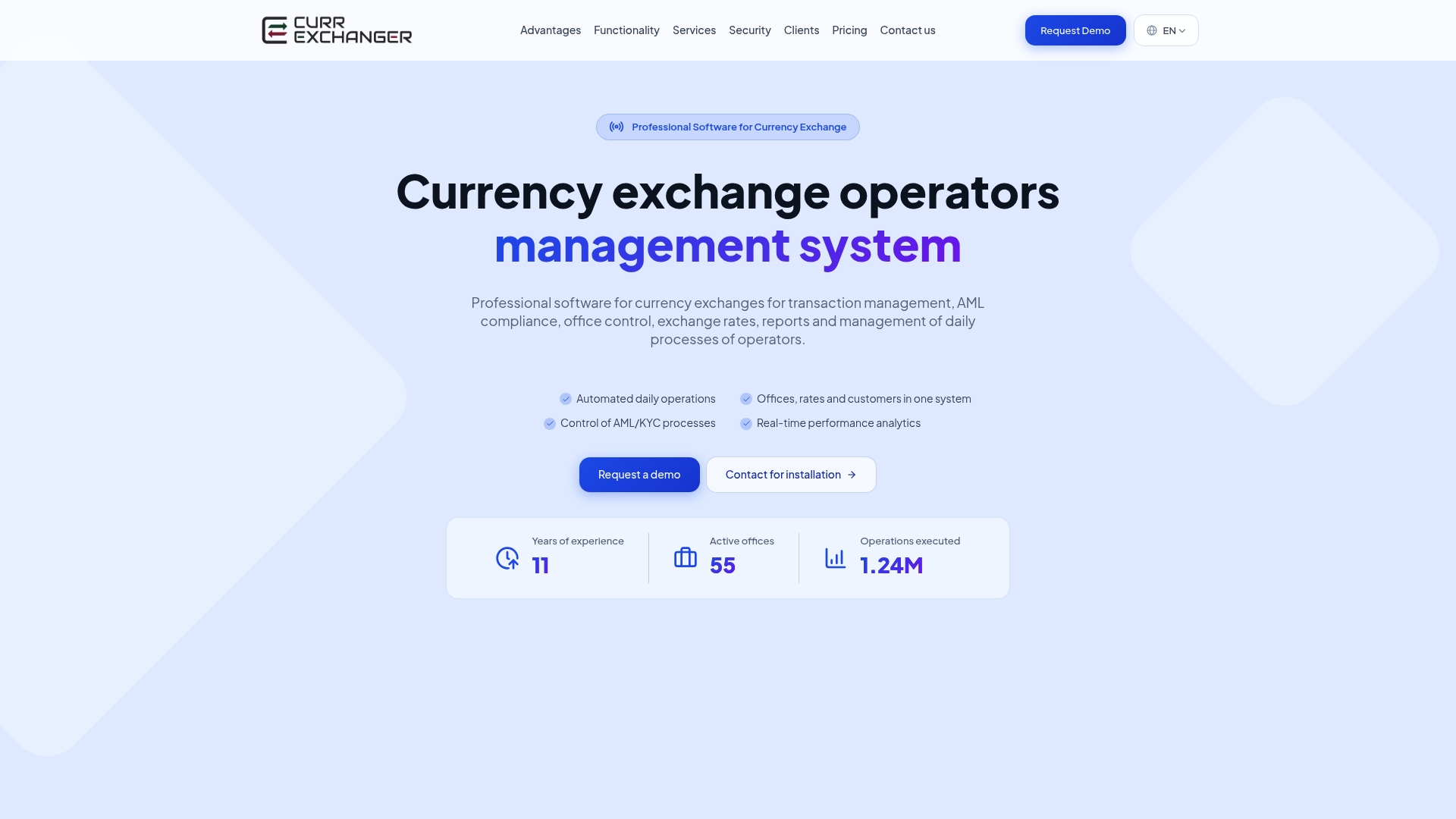
Currexchanger is built specifically for currency exchange businesses managing multiple offices or branches. It covers transaction management and AML/KYC compliance in one platform, with exchange rate control, cash and inventory monitoring, banknote verification integration, and real-time analytics. Unlike general POS platforms, it includes multifactor authentication, geographic and IP restrictions, and detailed activity logs designed for the compliance requirements forex operators face. For businesses that need to track liquidity across currencies in real time across multiple locations, it handles that natively. It is not a replacement for the enterprise-scale retail POS options on this list. It is the right tool when your core business is currency exchange and you need a platform that understands that operation from the ground up.
Key Takeaways
The strongest DCSorg.com alternatives for Central Europe combine PSD2-native compliance, regional support infrastructure, and hybrid payment channel coverage in a single platform.
| Point | Details |
|---|---|
| Regional compliance is the deciding factor | Choose vendors with PSD2 and national AML certification, not just generic EU compliance claims. |
| Exorigo-Upos leads for on-site support | Its certified P2PE network and 400+ technicians across five CEE countries are unmatched regionally. |
| Fizen covers open banking for CEE | It connects to 200+ banks across seven Central and Eastern European countries with automated KYC. |
| Implementation takes 6–16 weeks for complex setups | Budget time for data migration and staff training, not just technical deployment. |
| Currexchanger suits forex-specific operations | Currency exchange operators with multi-branch needs get purpose-built AML, rate control, and compliance tools. |
FAQ
What makes DCSorg.com a poor fit for Central European businesses?
DCSorg.com's compliance tools target U.S. BSA/AML regulations and its support is U.S.-based, leaving Central European operators without PSD2-native features or local-language assistance.
Which alternative has the strongest regional presence in Central Europe?
Exorigo-Upos operates across Poland, Romania, Czech Republic, Slovakia, and Ukraine with certified P2PE terminals and an on-site service network of over 400 technicians.
Is PSD2 compliance required for all payment solutions in Central Europe?
Yes. Any payment or open banking solution operating in EU member states must comply with PSD2, which governs strong customer authentication and bank API access.
How long does migrating from DCSorg.com to an alternative take?
Simple cloud POS setups can go live in days. Financial-services platforms with AML integration and multi-branch architecture typically require 6–16 weeks from contract to live operation.
Which alternative is best for currency exchange operators specifically?
Currexchanger is purpose-built for Bureau de Change and multi-branch forex operators, covering exchange rate control, AML/KYC compliance, and real-time multi-currency tracking in one platform.