
Financial compliance software integration types define how currency exchange operators and international finance businesses connect their core systems to AML, KYC, and regulatory reporting tools. The three primary categories are direct APIs, batch processing APIs, and middleware orchestration layers. Each serves a distinct function, and choosing the wrong type creates compliance gaps that regulators notice. For businesses managing multiple branches or high transaction volumes, the integration architecture is not a technical detail. It is a regulatory decision.
What are the main financial compliance software integration types?
Currency exchange operators and fintechs primarily use three integration types for compliance: direct APIs, batch APIs, and middleware layers. Each maps to a different operational need, and most mature compliance programs use all three in combination.
Direct API integrations connect your platform to a compliance vendor in real time. When a customer submits identity documents, a direct API call triggers biometric verification, PEP screening, and sanctions checks within seconds. This is the standard approach for KYC onboarding. The speed matters because customer abandonment rises sharply when verification takes more than a few seconds.

Batch API integrations handle scheduled re-screening at scale. Rather than checking each customer in real time, batch processing sends thousands of records to a sanctions or PEP database on a nightly or weekly schedule. This approach meets periodic re-validation requirements without consuming real-time system resources. It is the backbone of ongoing AML monitoring for large customer bases.
Middleware and orchestration layers sit between your core platform and multiple compliance vendors. They aggregate outputs from identity verification, transaction monitoring, and sanctions screening into a single workflow. This reduces the number of direct integrations your engineering team must maintain and creates a centralized point for logging and audit trail management.
- Direct APIs: best for real-time onboarding, document verification, and instant sanctions checks
- Batch APIs: best for periodic re-screening, bulk transaction monitoring, and scheduled reporting
- Middleware layers: best for multi-vendor environments where data must be reconciled before reaching analysts
Pro Tip: Map each compliance task to its required response time before selecting an integration type. Real-time KYC demands direct APIs. Monthly re-screening works fine with batch processing. Mixing these up wastes engineering resources and creates latency where it hurts most.
How modern API architectures support compliance integration
Event-driven connectivity has replaced point-to-point connections as the standard in finance API architecture. Point-to-point integrations create a fragile web where one vendor change breaks multiple downstream systems. Event-driven architecture decouples systems so each component reacts to data events independently.
The practical implications for compliance teams are significant:
- API gateways act as a single entry point for all compliance API traffic, enforcing authentication, rate limiting, and logging before requests reach any vendor system.
- iPaaS platforms connect core banking, AML screening, tax reporting, and regulatory filing systems through pre-built connectors, reducing custom development time.
- Message queues and event streaming handle high-volume transaction environments where synchronous API calls create bottlenecks. A queue absorbs traffic spikes and delivers events to compliance systems at a manageable rate.
- Audit trails and traceability are built into event-driven systems by design. Every event carries a timestamp, source identifier, and payload, which satisfies regulatory requirements for complete transaction histories.
- Latency management becomes explicit rather than accidental. Architects define acceptable response times for each compliance check and configure timeouts and fallback behaviors accordingly.
The shift to event-driven architecture also supports the accounting integration benefits that currency exchange operators need, connecting compliance data directly to financial reporting without manual exports.
Practical challenges of integrating multiple compliance vendors
Multi-vendor compliance stacks create complexity that grows faster than the number of vendors. A stack of five vendors can require 2–3 months of initial engineering setup before ongoing maintenance challenges even begin. That timeline does not include the time needed to test edge cases, handle API versioning, or train compliance analysts on new dashboards.
The core challenges fall into four areas:
- Data model mismatches: Each vendor structures customer records, risk scores, and alert data differently. Normalizing these into a consistent internal format requires custom mapping logic that breaks whenever a vendor updates their schema.
- Error handling inconsistencies: One vendor returns a timeout error; another returns a partial result. Without an orchestration layer, your system must handle each vendor's failure modes separately, which multiplies the code surface area.
- Onboarding latency: Each added vendor adds seconds to the onboarding flow. Orchestration layers handle timing differences and partial failures to preserve the customer experience. Without orchestration, a single slow vendor degrades the entire onboarding process.
- Audit trail fragmentation: Disconnected dashboards lead to manual reconciliation and risk gaps. Analysts need a single view of KYC data and AML profiles to make accurate risk decisions.
Pro Tip: Before adding a new compliance vendor, document exactly which data fields you need from them and how those fields map to your internal schema. This exercise often reveals that an existing vendor already covers the requirement, saving months of integration work.
Regulatory responsibility adds another layer of complexity. Institutions remain fully responsible under AML law for outsourced compliance tasks. Providers are legally treated as extensions of the regulated entity, not independent parties. This means your integration architecture must include active oversight mechanisms, not just technical connectivity.
The trade-off between best-of-breed components and all-in-one platforms is real. All-in-one platforms reduce initial integration costs but may create vendor lock-in. Best-of-breed stacks offer flexibility but require more complex orchestration. The right answer depends on your transaction volume, regulatory footprint, and internal engineering capacity.
How integration types align with 2026 compliance regulations
Regulatory requirements in 2026 are specific about what compliance integrations must deliver. Polish financial institutions, for example, must automate reporting to GIIF using the goAML standard, integrating core systems with AML platforms capable of generating XML-formatted CTR and STR reports. Implementation deadlines fall in the second half of 2026.
| Regulatory requirement | Integration type needed | Key detail |
|---|---|---|
| KYC onboarding verification | Direct API | Real-time identity and document checks at account opening |
| Transactions above 15,000 EUR | Direct API + batch API | Mandatory KYC and transaction monitoring per goAML thresholds |
| CTR and STR filing to GIIF | Middleware + reporting API | XML generation and automated submission in goAML format |
| Periodic sanctions re-screening | Batch API | Scheduled checks against UN, EU, and OFAC sanction lists |
| GDPR and data residency compliance | Hybrid deployment architecture | Consistent APIs across cloud, on-premises, and hybrid modes |
Cloud-only platforms pose compliance risks in jurisdictions with strict data residency rules. Providers that offer consistent APIs across cloud, on-premises, and hybrid deployments better support auditability and legal compliance. This is not a preference. In some jurisdictions, it is a legal requirement.
PEP and sanctions screening integrations must connect to multiple lists simultaneously. UN, EU, and OFAC databases each update on different schedules. Batch APIs handle this efficiently by pulling updated lists on a defined schedule and re-screening the full customer base. The AML compliance guide for 2026 covers the specific oversight obligations that apply when these screening functions are outsourced to third-party providers.
Key Takeaways
The most effective compliance integration architecture for currency exchange businesses combines direct APIs for real-time onboarding, batch APIs for periodic re-screening, and middleware orchestration to centralize multi-vendor outputs and maintain a single audit trail.
| Point | Details |
|---|---|
| Three core integration types | Direct APIs, batch APIs, and middleware layers each serve distinct compliance functions. |
| Orchestration reduces latency | Middleware layers reconcile conflicting vendor outputs and prevent customer abandonment during onboarding. |
| Legal responsibility stays with you | AML law holds institutions accountable for outsourced compliance tasks, requiring active oversight of all integrations. |
| Regulatory reporting needs automation | goAML-standard CTR and STR filing requires core systems to integrate with AML platforms capable of XML generation. |
| Deployment mode affects compliance | Hybrid API architectures support GDPR and data residency requirements better than cloud-only platforms. |
What I've learned about picking the right integration approach
After working with currency exchange operators across different regulatory environments, one pattern stands out. Businesses consistently underestimate the cost of fragmented integrations and overestimate the value of adding another best-of-breed vendor.
The instinct to pick the best tool for each compliance task is understandable. But a five-vendor stack without a proper orchestration layer creates a system that only your most senior engineer fully understands. When that person leaves, or when one vendor updates their API, the whole stack becomes fragile. I've seen compliance teams spend more time reconciling data across dashboards than actually reviewing alerts.
The businesses that handle compliance most effectively treat their integration architecture as a product, not a project. They define a standard internal data model for compliance data, build or buy an orchestration layer that normalizes vendor outputs, and add new vendors only when the existing stack genuinely cannot cover a requirement.
Regulatory trends reinforce this approach. The move toward goAML-standard reporting and stricter data residency rules in 2026 rewards businesses that have centralized, auditable integration architectures. Regulators want to see a clear chain of evidence from transaction to report. A fragmented stack makes that chain hard to demonstrate.
For currency exchange operators specifically, the volume and speed of transactions make orchestration non-negotiable. A direct API that adds three seconds to every onboarding check is acceptable for a bank processing hundreds of applications per day. For a busy exchange office processing hundreds of transactions per hour, that latency compounds quickly.
— Bartas
Currexchanger's approach to compliance integration
Currency exchange businesses that need compliance integrations built into their core platform, rather than bolted on afterward, have a direct path forward with Currexchanger.
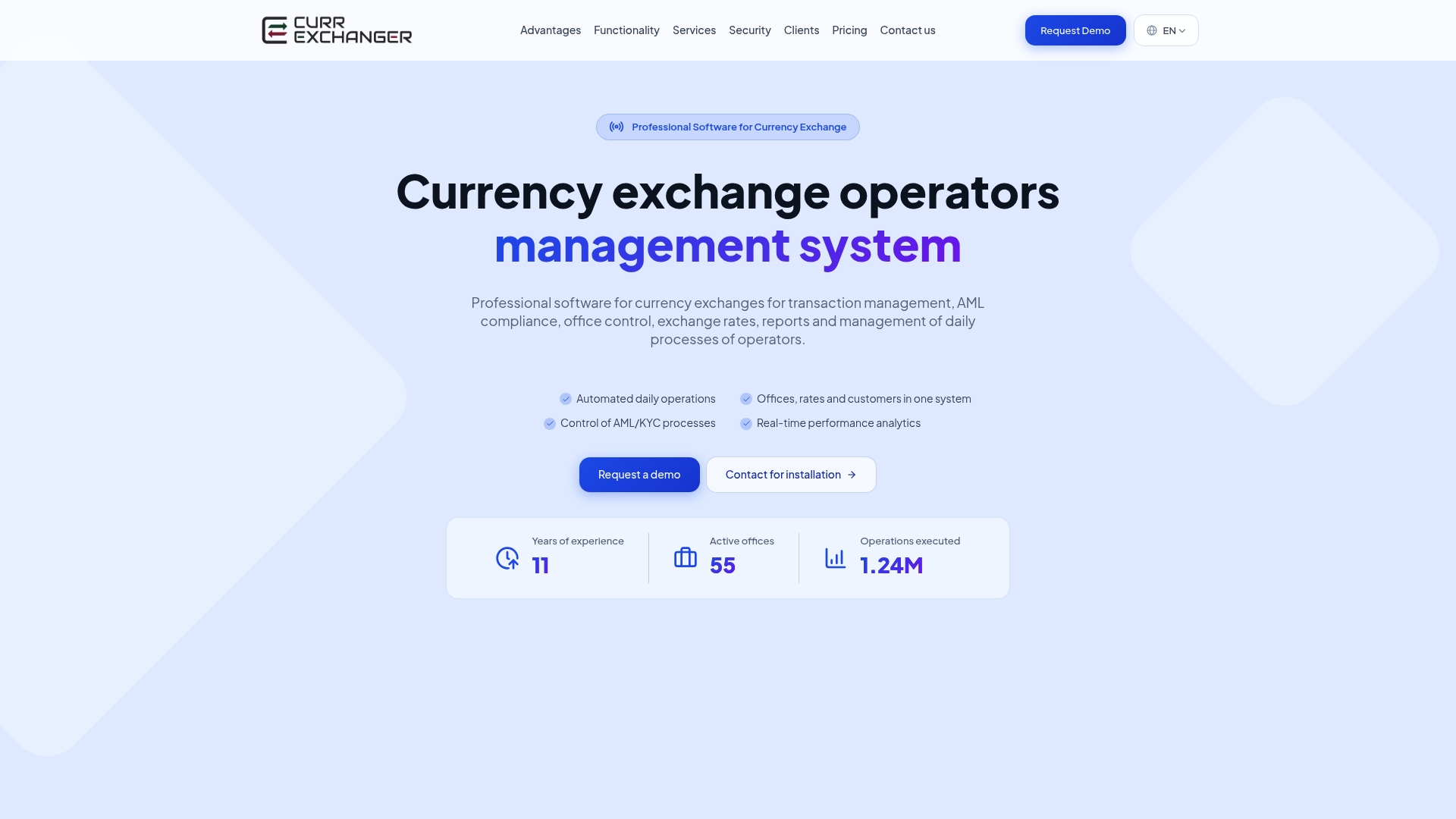
Currexchanger connects directly to external AML and KYC screening providers through API integrations, automates transaction monitoring, and generates the compliance reports your regulatory obligations require. The platform supports multi-branch operations, meaning compliance data from every office flows into a single audit trail rather than sitting in separate systems. For businesses managing multi-currency liquidity alongside compliance obligations, Currexchanger handles both without requiring separate tools. The Currexchanger platform is built for currency exchange operators who need compliance and operations to work together, not in parallel.
FAQ
What are the three main financial compliance software integration types?
The three main types are direct APIs, batch APIs, and middleware orchestration layers. Direct APIs handle real-time checks, batch APIs manage periodic re-screening, and middleware centralizes multi-vendor outputs into a single workflow.
Why does onboarding latency matter in compliance integrations?
Each additional compliance vendor adds seconds to the onboarding process, and slow onboarding increases customer abandonment. Orchestration layers manage timing differences and partial failures to keep the experience fast.
Who is legally responsible when compliance tasks are outsourced?
The regulated institution remains fully responsible under AML law, even when compliance functions are handled by third-party providers. Providers are treated as extensions of the institution, not independent parties.
What is the goAML standard and which integrations support it?
goAML is the reporting format required by financial intelligence units, including GIIF in Poland, for CTR and STR submissions. Supporting it requires middleware or reporting API integrations capable of generating XML-formatted reports from transaction data.
How does GDPR affect compliance software integration architecture?
GDPR and local data residency rules restrict where customer data can be stored and processed. Compliance platforms that offer consistent APIs across cloud, on-premises, and hybrid deployments provide the flexibility needed to meet these requirements without rebuilding integrations.