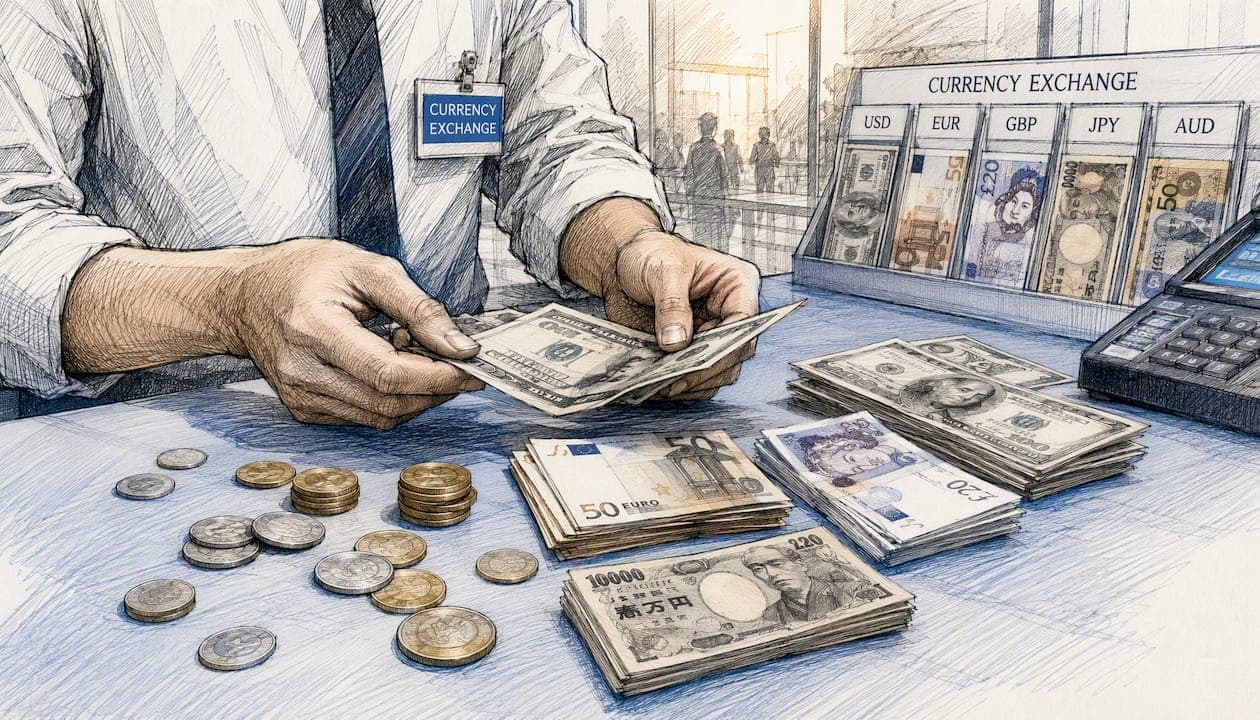
A compliant kasų pamainų valdymas program means every cashier shift starts with a verified float, runs under continuous transaction monitoring, and ends with a signed, auditable reconciliation that a regulator could reconstruct from paper alone. If your shift handovers rely on memory or a sticky note, you have a gap. Fix it with these five actions before you read another word:
- Require a documented float count, by currency and denomination, at the start and end of every shift.
- Trigger identity verification automatically at the legal thresholds, not at a cashier's discretion.
- Make every handover a signed document with cashier and supervisor initials, not a verbal pass-off.
- Turn on shift-level audit logging so timestamps, approvals, and discrepancies are exportable on demand.
- Assign one internal control owner (your AML officer) who reviews shift anomalies weekly, not quarterly.
These five actions map directly to obligations under the Law of the Republic of Lithuania on the Prevention of Money Laundering and Terrorist Financing, Bank of Lithuania supervisory priorities, and the internal control system every licensed operator must maintain. The rest of this guide breaks down exactly how to build that system, shift by shift.
Key Takeaways
A compliant currency-exchange shift requires verified floats, threshold-triggered ID checks, signed handover logs, and exportable audit trails working together, not in isolation.
| Point | Details |
|---|---|
| Standardize the shift sequence | Open, mid-shift check, and close should follow the same steps at every branch, every time. |
| Automate threshold checks | ID verification at €6,000 and €15,000 should trigger automatically, not depend on cashier judgment. |
| Track discrepancy rate as a KPI | Aim for under 1% of shifts flagged by month two of a rollout. |
| Enforce segregation of duties | Cashiers, supervisors, and compliance officers need distinct, logged permissions. |
| Keep logs linked to evidence | Tie shift reports to CCTV timestamps and transaction receipts for faster audits. |
| Use Currexchanger for automation | The platform ties float reconciliation, AML/KYC screening, and audit exports into one multi-branch system. |
Table of Contents
- What Kasų Pamainų Valdymas Actually Covers
- What Regulations Require at Shift Level
- How Should a Cashier Shift Run Start to Finish?
- Setting Cash Limits Without Starving the Till
- Who Should Have Access to What During a Shift?
- Handling Shortages, Overages, and Sanctions Hits
- Where Software Fits Into Shift Management
- Rolling Out Standardized Shift Controls in 90 Days
- Building a Shift Report Template You Can Actually Audit
- What I've Learned Watching Operators Fix This
- How Currexchanger Handles the Operational Load
- Where to Read the Source Material
- Sources
- FAQ
What Kasų Pamainų Valdymas Actually Covers
Kasų pamainų valdymas, in a currency-exchange office, means the assignment, monitoring, and reconciliation of cashier shifts, tied directly to compliance obligations that don't exist in ordinary retail settings. It's not a scheduling problem. It's a control problem where every shift produces a paper trail a regulator can request.
The scope is narrower and heavier than generic shift work:
- Assigning a named cashier to a specific till, with a documented start-of-shift float by currency.
- Reconciling cash and banknotes against transaction records at defined checkpoints during the shift.
- Running identity checks and sanctions screening tied to transaction size, not store traffic.
- Producing a signed shift report and handover log that ties every discrepancy to a named person.
- Enforcing role-based access so only authorized staff can open a till or approve an override.
What it doesn't cover: employee scheduling software for staffing coverage, payroll hours, or the kind of cash-drawer counting a coffee shop does at closing. Those are retail POS shift practices, and they carry none of the identity-verification or reporting obligations that apply here. The Republic of Lithuania Law on Currency Exchange Operators treats currency exchange as a licensed, supervised activity, which is why shift management here means compliance management first and operations second.
What Regulations Require at Shift Level
Most operators think of AML rules as something the compliance department handles monthly. In practice, the law dictates decisions a cashier makes in real time, transaction by transaction.
Identity verification thresholds are the clearest example. Lithuanian law requires customer identification for cash-exchange transactions above €6,000, and for occasional transactions above €15,000. A cashier who doesn't know these numbers cold, or a system that doesn't flag them automatically, is a compliance failure waiting to surface during an inspection.
Statistic to remember: certain identification records must be retained for up to eight years, which means your shift documentation system needs archival capacity, not just daily backups.
Fold these into daily shift checks:
- ID capture at the point of sale whenever a transaction crosses the €6,000 or €15,000 thresholds.
- Sanctions screening run at every transaction, not batched at day's end, since Bank of Lithuania supervisory guidance names sanctions implementation as a priority inspection area.
- Continuous monitoring of repeat customers and business relationships, logged per shift, not reviewed only during periodic audits.
- Suspicious transaction reporting handled promptly, per FNTT guidance on timely escalation to the designated AML officer.
- Retention of shift logs, CCTV timestamps, and audit exports in a format that can be pulled on request during an inspection.
How Should a Cashier Shift Run Start to Finish?
Standardizing the sequence removes ambiguity. Here's what should happen every time, in this order.
- Opening. The assigned cashier counts the float by currency and denomination, verifies the ID scanner and card terminal are functional, and confirms the sanctions list has synced since the last shift.
- Mid-shift. A supervisor runs a spot reconciliation at a set interval, ideally every two to three hours, comparing till contents against system-recorded transactions.
- Threshold checks. Any transaction crossing the ID-verification thresholds gets flagged, documented, and, if unusual, escalated before it completes.
- Closing. The cashier performs a full denomination count against the system total, flags any variance, and a supervisor co-signs the handover before the till is secured.
Treating reconciliation as something that happens continuously, not just at close, is what separates offices that catch discrepancies early from those that discover a shortage three shifts later with no way to trace it.
Capture these fields on every handover log:
- Shift ID, branch code, and cashier name.
- Start and end float, broken down by currency and denomination.
- Any discrepancy amount, with a written explanation.
- Supervisor initials and a timestamp for sign-off.
- Flags for any suspicious or threshold-triggering transactions during the shift.
Setting Cash Limits Without Starving the Till
Every branch needs a floor and a ceiling for cash on hand, in every currency it trades. Too little float and cashiers turn away customers during peak hours. Too much and you're carrying unnecessary robbery and misappropriation risk on a non-earning asset.
A workable starting heuristic: set the minimum float to cover your busiest two-hour window based on the last 90 days of transaction data, and cap the maximum at roughly one and a half times that figure, with anything above triggering a same-day transfer to secure storage or a bank drop. Cash-control guidance from the Comptroller's Handbook recommends exactly this balance: enough liquidity to serve customers, minimal excess exposure.
Track these per shift:
- Float variance — the dollar or euro gap between expected and counted cash at close.
- Discrepancy rate — how often a shift closes with any variance at all, even a small one.
- High-value exchange frequency — how often threshold-triggering transactions occur, which tells you where training or staffing needs attention.
Reduce theft exposure with dual custody for reserve cash (two authorized staff required to access the safe), bait money in tills for robbery cases, and a fixed threshold above which cash must move to secure storage rather than sit in a drawer overnight. When cash moves between branches, require a documented approval step and a receiving signature, tracked through multi-currency reconciliation practices built for networks with more than one location.
Who Should Have Access to What During a Shift?
Segregation of duties is the control that makes fraud harder to hide and audits faster to complete. A cashier who can also approve their own overrides, delete a transaction, or edit a shift report after close defeats the entire point of an audit trail.

| Role | Allowed actions |
|---|---|
| Cashier | Process transactions, count float, flag discrepancies |
| Supervisor / shift manager | Approve overrides, co-sign handovers, run mid-shift reconciliations |
| Branch manager | Approve cash transfers, review daily reports, manage staff access |
| Compliance officer | Review flagged transactions, file reports, audit logs quarterly |
Every action a role takes should generate a log entry: who did it, when, and what was approved. Minimum requirements include event-level timestamps, digital or physical signatures on handovers, and exportable reports formatted for inspection requests.
Layer in multi-factor authentication for system logins, role-based restrictions so a cashier can't access supervisor functions, and IP or geolocation limits if your offices operate across multiple cities. Build an emergency access procedure too, so a locked-out supervisor doesn't bring a shift to a halt.
Pro Tip: Link your shift logs to CCTV timestamps and transaction receipts in the same export file. When a discrepancy shows up weeks later, having all three data points in one place cuts investigation time from hours to minutes.
Handling Shortages, Overages, and Sanctions Hits
A discrepancy at shift close isn't automatically fraud, but it needs a consistent response every time, or your team will start treating small variances as normal.
For cash shortages or overages:
- Secure the till immediately and don't let the next cashier take over until the count is verified twice.
- Document the exact variance, time, and any transactions that occurred near close.
- Notify the supervisor before the cashier leaves the premises.
- Isolate the cashier from further shifts pending review if the variance is unusually large or repeats.
For suspicious transactions, follow this sequence:
- Hold the transaction if anything about the customer, amount, or pattern seems inconsistent with normal activity.
- Capture all available data: ID, transaction details, and any surveillance footage timestamp.
- Notify the internal AML officer the same day, in line with the reporting expectations set out in FNTT supervisory guidance.
- File the report with the Financial Crime Investigation Service within the required timeline, attaching supporting documentation.
For sanctions hits, screening should happen at the point of sale, not after. If a match triggers, block the transaction, preserve the transaction metadata and refusal log, and escalate immediately, since Bank of Lithuania supervisory findings specifically call out weak sanctions controls as a recurring deficiency. A suspicious-activity report needs the customer's ID, transaction details, surveillance clips if available, and the signed handover log covering that shift.
Where Software Fits Into Shift Management
Manual reconciliation works for a single office with one till. It breaks down fast once you're running multiple branches, multiple currencies, and shift patterns that overlap across time zones. Software closes that gap by turning float checks, audit exports, and compliance screening into automatic processes instead of manual ones.
Look for these capabilities:
- Real-time multi-currency ledger that updates as transactions happen, not at batch close.
- Automated float reconciliation that flags variance the moment a shift closes.
- Audit-log export in a format ready for a Bank of Lithuania inspection request.
- Built-in sanctions and AML screening tied directly to transaction entry.
- Role-based access with MFA baked in, not bolted on.
Integrations matter as much as core features. A system that connects to banknote detectors, AML/KYC providers, and CCTV timecodes turns a shift report from a spreadsheet into an evidentiary record. Encryption, activity logs, and configurable retention policies should be table stakes, not upsells.
Pro Tip: Don't automate everything at once. Start with float reconciliation and audit exports, since those are the two areas where manual error rates are highest, then layer in sanctions screening once staff trust the new workflow.
Rolling Out Standardized Shift Controls in 90 Days
A phased rollout beats a single flip-the-switch launch, especially across multiple branches.
- Weeks 0 to 2: Run a baseline audit of current shift practices at each branch. Assign clear roles, set opening and closing float thresholds, and document your existing gaps.
- Weeks 3 to 6: Pilot standardized procedures at one branch. Train cashiers on the new handover format, and if you're deploying software, enable the reconciliation and audit-log modules first.
- Weeks 7 to 12: Scale the procedures to remaining branches, audit the pilot's results against your baseline, and adjust thresholds or KPIs based on what the data shows.
Set targets for each phase:
- Discrepancy rate under 1% of shifts by month two.
- Reconciliation time down by half compared to your baseline by month three.
- Zero unfiled suspicious-activity reports past the required timeline.
- Float variance trending toward zero across all currencies by month three.
Training specific to currency-exchange work, not generic retail onboarding, is what makes the difference here. New cashiers need to understand threshold triggers and sanctions screening before their first solo shift, covered in more depth in staff training best practices built for this industry.
Building a Shift Report Template You Can Actually Audit
A minimal shift report needs enough detail that an auditor, or a police investigator, could reconstruct the shift without asking a single follow-up question.
| Field | Why it matters |
|---|---|
| Shift ID, branch, cashier name | Ties every entry to a specific person and location |
| Start/end float by currency | Establishes the reconciliation baseline |
| Transaction totals by currency | Cross-checks against system records |
| Discrepancy amount and explanation | Flags issues for review before they compound |
| Supervisor sign-off | Confirms independent verification occurred |
| Export filename and timestamp | Preserves a tamper-evident audit trail |
Denomination-level counts matter more than most managers realize. A €50 shortfall could be one missing note or ten miscounted coins, and only a denomination-level breakdown tells you which. Attach CCTV timecodes for any discrepancy window and a checksum on the transaction export so the file can't be silently altered after the fact.
Store templates centrally, not on individual branch computers, using a method covered in tracking cash inventory across an exchange office, so every branch produces reports in the same format regardless of who's running the shift.
What I've Learned Watching Operators Fix This
The operators who struggle most with shift management aren't the ones without procedures. They're the ones with procedures nobody follows consistently, because the process lives in a manager's head or a spreadsheet nobody updates in real time. The fix isn't more paperwork. It's making the correct behavior the easiest behavior, so a cashier does the compliant thing because it's the fastest path through the shift, not because they memorized a policy binder.
The biggest measurable shift I've seen come from treating reconciliation as continuous rather than something that happens once a day. Offices that run mid-shift spot checks catch discrepancies while the transaction is still fresh in someone's memory, instead of discovering a gap eighteen hours later with no way to trace it back. That single change, more than any software purchase, tends to move the needle on discrepancy rates fastest. If you're evaluating how to formalize this across branches, the operational groundwork matters more than the tool you eventually pick.
How Currexchanger Handles the Operational Load
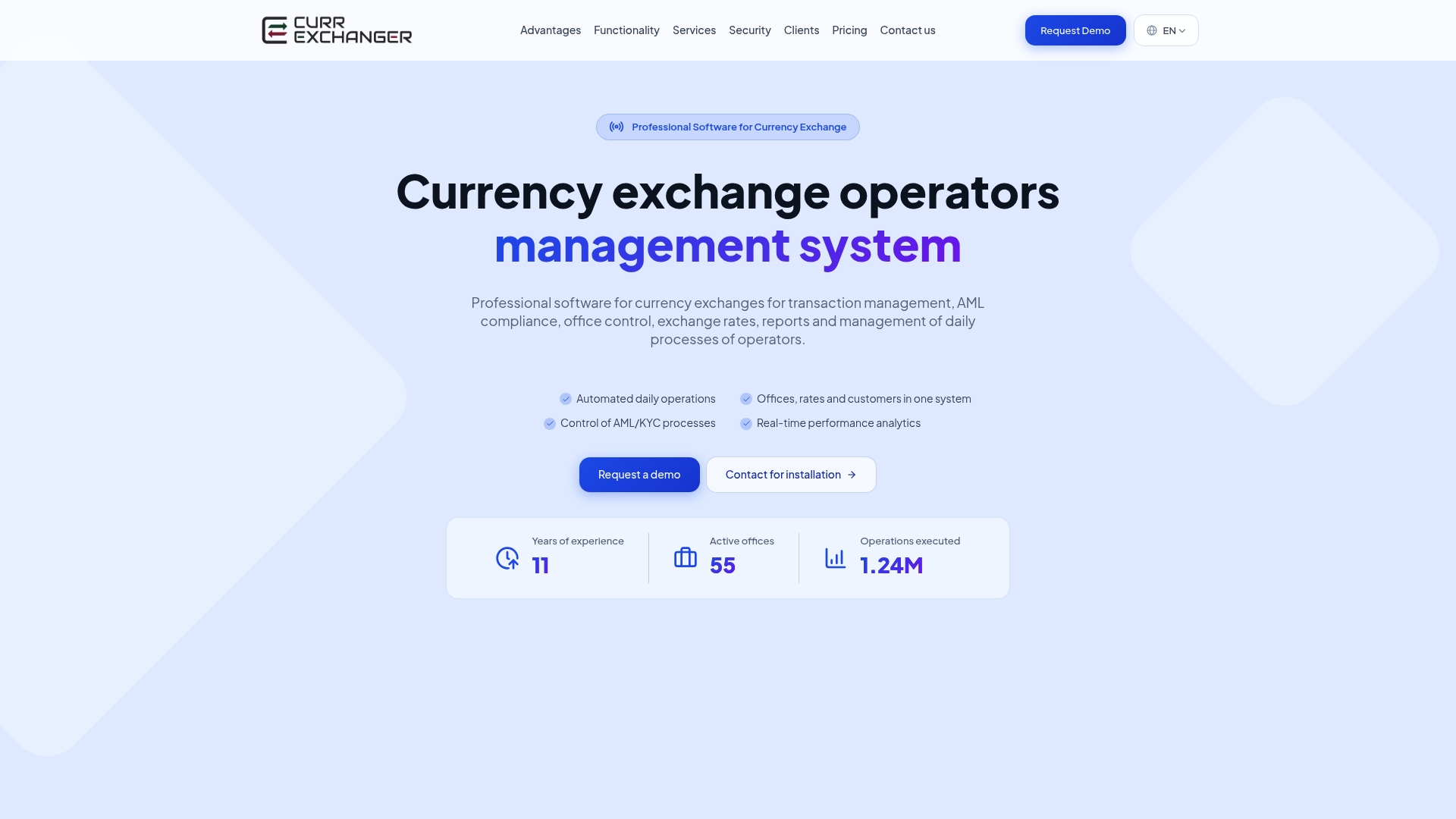
Everything covered above, float checks, audit exports, sanctions screening, role-based access, gets significantly harder to run consistently by hand once you're managing more than one branch. Currexchanger was built specifically for currency-exchange operators facing exactly that scaling problem, not adapted from generic retail POS software.
Here's how it maps to the operational needs this guide covers:
- Automated float verification and reconciliation at shift open and close, with variance flagged instantly.
- Audit-log exports formatted for inspection requests, tied to timestamps and supervisor sign-offs.
- Built-in AML/KYC integrations for identity checks and sanctions screening at the point of sale.
- Multi-branch dashboards giving a compliance officer or branch manager visibility across every location from one screen.
- Role-based access with MFA and IP restrictions, so segregation of duties is enforced by the system, not just written in a policy.
For tracking cash positions across currencies and branches specifically, the liquidity tracking guide walks through how the platform handles float thresholds in more detail. Currexchanger deploys for single offices and full networks alike, with pricing and demo scheduling available directly on the Currexchanger platform. If shift-level compliance is currently held together by spreadsheets and trust, booking a demo is the fastest way to see what changes.
Where to Read the Source Material
Managers building or revising shift policies should read the primary legal and supervisory texts directly rather than relying on secondhand summaries.
- The Law on the Prevention of Money Laundering and Terrorist Financing sets the ID thresholds and retention rules that shift procedures must follow.
- The Republic of Lithuania Law on Currency Exchange Operators covers licensing, internal control descriptions, and governance obligations.
- Bank of Lithuania's AML/CTF supervision materials detail sanctions screening priorities and inspection focus areas.
- The Bank of Lithuania's page on currency exchange operator licensing explains what supervisors expect during authorization and ongoing review.
- FNTT guidance outlines AML officer responsibilities, training expectations, and reporting timelines.
The ID thresholds and reporting timelines are the sections most managers reference repeatedly. Bookmark them alongside your internal SOP, since regulators expect your procedures to reflect the law's current wording, not a paraphrase.
This article provides general operational guidance and is not a substitute for legal advice. Confirm current thresholds and reporting obligations with the primary legislation or a qualified compliance professional before finalizing internal policy.
Sources
- LAW OF THE REPUBLIC OF LITHUANIA ON THE PREVENTION OF MONEY LAUNDERING AND TERRORIST FINANCING
- XII-1033 Republic of Lithuania Law on Currency Exchange Operators
- Guidance and supervisory materials on AML/CTF (Financial Crime Prevention Service / FNTT)
- Cash accounts — Comptroller's Handbook (OCC)
FAQ
What Is Kasų Pamainų Valdymas in a Currency Exchange Office?
It's the set of procedures and controls governing cashier shift assignment, float reconciliation, and compliance checks specific to currency exchange, distinct from general retail shift scheduling.
How Often Should Cash Be Reconciled During a Shift?
Run a full count at open and close, plus a mid-shift spot check every two to three hours, since continuous reconciliation catches discrepancies before they compound.
What Transaction Amount Triggers Mandatory ID Verification?
Lithuanian law requires identity verification for cash exchanges above €6,000 and occasional transactions above €15,000.
Can Software Replace Manual Shift Reconciliation Entirely?
Software like Currexchanger automates float checks, audit exports, and sanctions screening, but a human still needs to review flagged discrepancies and sign off on handovers.
How Long Must Shift and Identification Records Be Kept?
Certain identification records must be retained for up to eight years under Lithuanian AML law.