
Why automated regulatory compliance reporting matters for currency exchange in Central Europe
Currency exchange operators in Central Europe face a compliance burden that grows every year. AML/KYC obligations, suspicious activity reporting, personnel vetting records, and real-time transaction monitoring all demand accuracy that manual processes simply cannot sustain at scale.
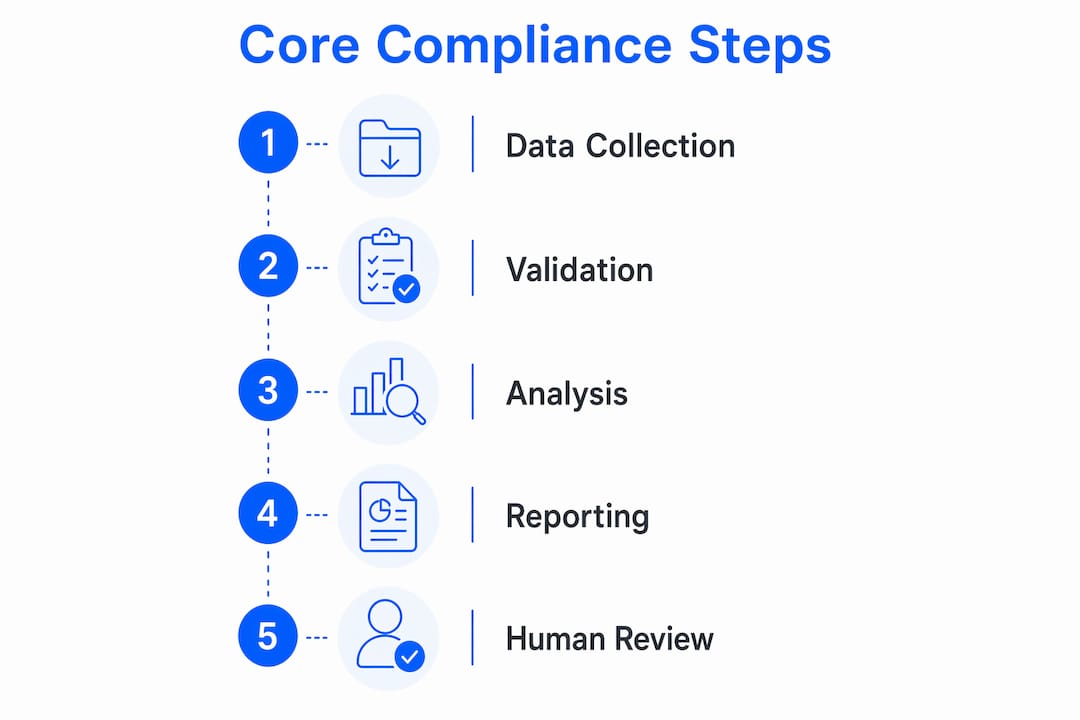
Automated regulatory compliance reporting uses technology to collect, validate, and submit the data regulators require, without relying on staff to catch every discrepancy by hand. For currency exchange operators, this means:
- Continuous transaction monitoring against AML thresholds
- Automatic flagging of incomplete payer/payee data under the Travel Rule (EU Regulation 2023/1113)
- Documented records of management integrity and personnel vetting
- Timely submission of material weakness reports as the EBA mandates
The EBA's risk-based approach is the governing framework here. Automation augments human judgment; it does not replace it. Compliance officers still make the final calls, but they make them with complete, real-time data rather than spreadsheets assembled two days after the fact. Currexchanger is built around this model, integrating AML/KYC data flows, reporting, and security controls into one platform for exchange operators running single offices or multi-branch networks.
Table of Contents
- What your compliance automation system must actually do
- How to implement compliance automation without the usual pitfalls
- Currexchanger handles the compliance load so your team handles the decisions
- FAQ
- Key Takeaways
What your compliance automation system must actually do
A capable system covers more ground than most operators expect. The table below maps the core functions to their regulatory basis.

| Function | Regulatory driver |
|---|---|
| Real-time transaction monitoring | EU Travel Rule 2023/1113 |
| Beneficial ownership consolidation | EU AML Directive 2024 |
| Personnel vetting records | EU AML Personnel Standards 2024 |
| Material weakness reporting | EBA RTS on AML Weaknesses |
| FIU data access (centralized registers) | EU FIU Access Directive 2024 |
| Unified CDD/EDD from July 2027 | AMLR 2024/1624 |
Beyond the table, a few capabilities separate adequate systems from genuinely useful ones:
- Predictive risk analytics: The EBA's regulatory technical standards frame automation as a tool for forecasting compliance failures before they occur, not just logging them after.
- Multi-factor authentication and IP restrictions: Security controls must protect the data FIUs need direct, unfiltered access to.
- Scalable architecture: A system that works for one branch must handle ten without rebuilding the reporting logic.
- Customizable dashboards: Compliance managers need views tailored to their jurisdiction's submission formats.
Connecting beneficial ownership data with cross-jurisdiction transaction patterns is what turns a reporting tool into a genuine detection system. See AML compliance in exchange offices for how this plays out operationally.
How to implement compliance automation without the usual pitfalls
Most failed deployments share one problem: operators try to automate a broken process instead of fixing it first.
- Audit your current reporting gaps. Map every manual step in your AML/KYC workflow. Where do errors cluster? Where does data arrive late?
- Define your regulatory scope. Central European operators must account for national transpositions of the EU AML Directive now, and prepare for AMLR 2024/1624's unified rules from July 10, 2027.
- Select a vendor with native compliance integrations. Evaluate whether the platform connects directly to your existing AML/KYC providers and accounting systems. Review financial compliance software integration types before shortlisting vendors.
- Plan for legacy system constraints. API connectivity matters more than feature lists when your core system is five years old.
- Budget realistically. Costs include software licensing, staff training, data migration, and ongoing maintenance. Skipping the training line is where most operators regret their estimates.
- Run parallel reporting during transition. Keep manual processes live for 60–90 days alongside the automated system to catch discrepancies before going fully live.
- Assign a named compliance officer. Automation handles data; a qualified person still owns the decisions. The EBA is explicit that human oversight is non-negotiable.
- Schedule quarterly reviews. Regulatory requirements shift. Your system configuration should shift with them.
Pro Tip: Get regulatory compliance guidance from a specialist before finalizing your vendor contract. A one-hour consultation often surfaces jurisdiction-specific requirements your vendor's standard setup doesn't cover.
For a deeper look at the risk-based methodology underpinning these steps, the compliance risk assessment guide covers the EBA framework in practical terms.
Currexchanger handles the compliance load so your team handles the decisions
Currency exchange operators who have worked through the implementation steps above consistently hit the same wall: finding a platform that covers transaction management, AML/KYC automation, personnel record-keeping, and regulatory reporting in one place, without stitching together three separate tools.
Currexchanger is built specifically for this. The platform automates currency exchange compliance reporting across single offices and multi-branch networks, with built-in AML/KYC integrations, multi-factor authentication, real-time analytics, and customizable reporting dashboards aligned to Central European regulatory requirements. You get the audit trail regulators expect and the operational visibility your team needs, without the manual overhead.
Book a demo at currexchanger.com to see how the platform fits your current setup.
FAQ
What does automated regulatory compliance reporting do for currency exchange operators?
It collects, validates, and submits AML/KYC data automatically, reducing manual errors and ensuring timely reporting to regulators and FIUs.
Is human oversight still required when compliance reporting is automated?
Yes. The EBA explicitly requires that automation complement, not replace, human judgment in compliance decisions.
How does the EU AMLR 2024/1624 affect Central European currency exchangers?
Starting July 10, 2027, AMLR 2024/1624 replaces fragmented national AML rules with a single binding EU framework, standardizing CDD, EDD, and beneficial ownership requirements across all member states.
What security features should a compliance automation system include?
Multi-factor authentication, detailed activity logs, and geographic or IP-based access restrictions are the baseline, ensuring only authorized personnel can access sensitive reporting data.
Can Currexchanger handle compliance reporting for multi-branch currency exchange networks?
Yes. Currexchanger's architecture scales from single offices to extensive branch networks, maintaining consistent AML/KYC reporting and audit trails across all locations.
Key Takeaways
Automated regulatory compliance reporting is a reliable way for currency exchange operators in Central Europe to meet AML/KYC obligations accurately, consistently, and without unsustainable manual workload.
| Point | Details |
|---|---|
| EBA risk-based approach | Automation must support human oversight, not replace it, per EBA guidelines. |
| AMLR deadline | From July 10, 2027, AMLR 2024/1624 unifies AML/KYC rules across all EU member states. |
| Travel Rule compliance | Systems must verify payer/payee data completeness in real time under EU Regulation 2023/1113. |
| Implementation order | Audit gaps first, then select a vendor, then run parallel reporting for 60–90 days before going fully live. |
| Currexchanger | Covers AML/KYC automation, multi-branch reporting, and security controls in one platform for currency exchange operators. |