
For multi-branch currency and financial operations in Central Europe, the right move is a centralized, BI-enabled reporting platform that pulls transaction logs, cash positions, CRM data, and ERP records into a single source of truth — with row-level security, immutable audit trails, and real-time dashboards built in.
That approach makes sense when you manage two or more branches, need to compare performance across locations, or face AML/KYC audit requirements. If you run a single office with straightforward transaction volumes, a well-configured spreadsheet or basic POS report may cover you for now. For everyone else, the selection criteria below will help you evaluate options, and Currexchanger is worth putting on your shortlist early.
The non-negotiables: a single-source-of-truth data model, row-level security so branch staff only see their own data, and audit trails that satisfy regulatory inspections without manual assembly.
- Right fit: Multi-branch networks needing cross-location benchmarking, automated compliance evidence, and real-time cash monitoring.
- Simpler alternative: Single-branch operators with low transaction volumes can start with a BI-connected POS or accounting export.
- Next step: Evaluate Currexchanger if your operation involves currency exchange, AML/KYC obligations, or more than two branches.
Key Takeaways
A centralized BI-enabled reporting platform with row-level security, immutable audit trails, and pre-built branch KPI templates is the most effective approach for multi-branch currency and financial operations in Central Europe.
| Point | Details |
|---|---|
| Single source of truth | Consolidate transaction logs, ERP, CRM, and bank feeds before building any dashboard. |
| KPI cadence matters | Separate daily operational, weekly financial, and monthly compliance KPIs to avoid burying risk signals. |
| Audit readiness first | Require immutable audit trails, configurable workbooks, and automated evidence capture during vendor evaluation. |
| Localization is a real cost | Central European fiscal and document-handling requirements add implementation effort; choose a vendor with native support. |
| Currexchanger recommendation | Currexchanger provides integrated AML/KYC, real-time dashboards, and multi-branch security for currency exchange operators. |
Table of Contents
- What does a branch manager reporting tool actually do?
- Which data sources must feed your reporting platform?
- What KPIs and dashboard templates should branch managers use?
- What compliance and audit features do you need in Central Europe?
- How do you evaluate and deploy a branch reporting tool?
- What practitioners get wrong when selecting these tools
- Currexchanger fits multi-branch currency operations in Central Europe
- Sources
- FAQ
What does a branch manager reporting tool actually do?
A branch manager reporting tools overview starts here: these platforms are not glorified spreadsheets. They are purpose-built systems that ingest data from multiple operational sources, apply business logic, and surface the right numbers to the right person at the right time.
The core modules you should expect from any serious platform:
- Dashboards: Live views of branch KPIs, transaction volumes, cash positions, and service metrics. Real-time dashboards let managers catch a cash shortfall or a compliance gap before it becomes a crisis.
- Scheduled reports: Automated daily, weekly, or monthly exports delivered to inboxes or shared folders, removing the manual pull.
- Alerting and notifications: Threshold-based triggers — a cash float dropping below a set level, a transaction exceeding an AML limit, a KPI moving outside its normal range.
- Comparative benchmarking: Side-by-side branch performance views that identify which locations are outperforming and which need attention. Branch analytics platforms unify this data in real time and enable staffing, forecasting, and comparative performance reporting that inform branch-level decisions.
- Cash and liquidity monitoring: Real-time float tracking across currencies and locations.
- Audit trail and compliance workbooks: Immutable logs of every transaction, user action, and system event. Branch audit management software can automate supervisory workflows, prioritize remediation, and maintain detailed audit histories to support inspections.
Feature glossary worth knowing:
Single source of truth — one consolidated data store that all reports draw from, eliminating conflicting figures across systems. Row-level security (RLS) — a permission layer that restricts which data rows a user can see, critical for keeping branch A's pricing away from branch B's staff. Role-based access — controls what actions each user type can perform. API connectors — programmatic links between the reporting platform and source systems. Pre-built KPI templates — ready-made dashboard layouts mapped to standard branch metrics. Scheduled exports — automated report delivery on a defined cadence.
Pro Tip: Set metric cadence and ownership before you build a single dashboard. Assign one person responsible for each KPI category — daily operational, weekly financial, monthly compliance — and you will cut dashboard fatigue before it starts. A dashboard nobody owns is a dashboard nobody trusts.
Which data sources must feed your reporting platform?
The single-source-of-truth model only works if the right systems are actually connected. Missing one critical feed produces gaps that corrupt every downstream report.
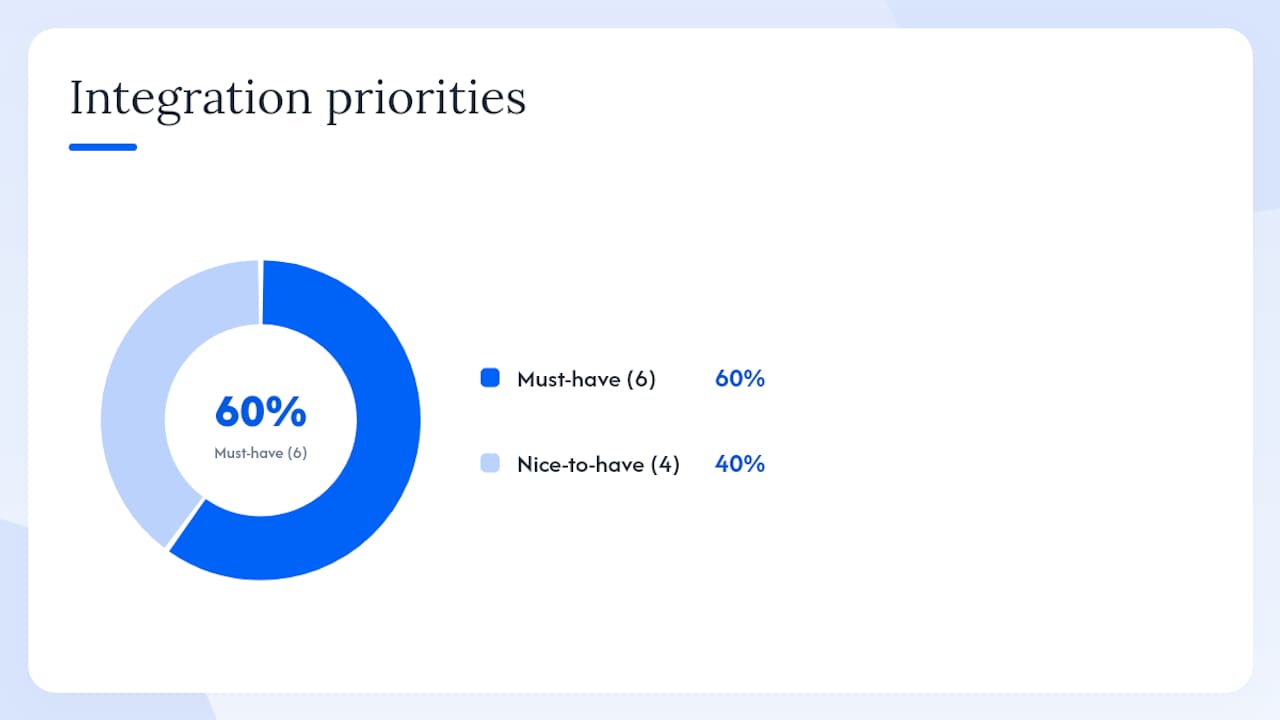
Must-have integrations for accurate branch performance and compliance:
- Teller and transaction logs: The heartbeat of any currency exchange or financial branch. Every transaction, every rate applied, every customer interaction must flow in automatically.
- POS systems: Point-of-sale data captures service fees, product mix, and transaction counts at the counter level.
- Accounting and ERP: General ledger entries, cost center allocations, and P&L data. Without this feed, your branch performance numbers are incomplete. CRM and ERP integration patterns vary widely; confirm your vendor supports your specific ERP version before signing.
- CRM: Customer records, visit frequency, and relationship data that connect transaction behavior to customer segments.
- Bank feeds: Reconciliation of cash movements against bank account balances, essential for float accuracy.
- FX rate services: Live or near-live exchange rate feeds that let you calculate margin per transaction and compare against market benchmarks.
Nice-to-have integrations that add depth:
- Staff scheduling and payroll (for staffing efficiency KPIs)
- Banknote verification system logs (for counterfeit tracking)
- AML/KYC provider feeds (for automated compliance evidence)
- Document automation tools that capture and index audit evidence automatically
On the technical side, API-based integrations are preferable to file-based ETL for anything requiring near-real-time accuracy, such as cash positions or transaction alerts. File-based transfers introduce lag and create reconciliation headaches. That said, some legacy accounting systems only support CSV or SFTP exports — plan for both patterns. For a technical breakdown of compliance software integration types, the differences between APIs, SFTP, and webhooks matter more than most managers expect.
Pro Tip: Before onboarding, validate your master keys — branch IDs, customer IDs, account codes — across every source system. Mismatched IDs are the single most common cause of duplicate records and broken joins in multi-branch reporting. Fix them in the source systems first, not in the reporting layer.
What KPIs and dashboard templates should branch managers use?
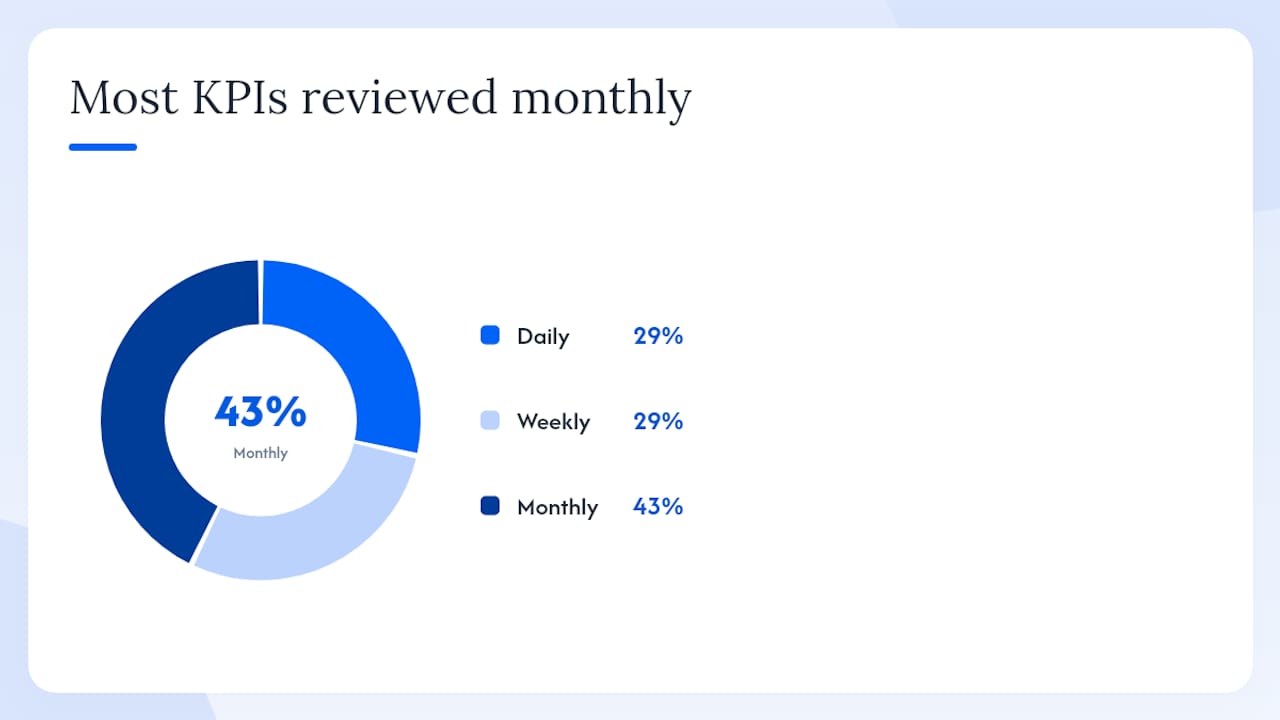
The right KPIs depend on cadence as much as category. Mixing daily operational metrics with monthly governance figures on the same dashboard buries the signals that need immediate action.
Daily operational KPIs
- Transaction count and volume by branch and currency pair
- Cash float levels per currency (actual vs. target)
- Average transaction processing time
- Alerts triggered (AML thresholds, float minimums)
- Teller error rate or correction count
Weekly financial KPIs
- Gross margin per branch (spread earned vs. market rate)
- Service fee revenue by branch and channel
- Cash replenishment frequency and cost
- Staff hours per transaction (efficiency ratio)
- Customer count and repeat visit rate
Monthly governance KPIs
- AML/KYC case rate and resolution time
- Audit finding count and open remediation items
- Regulatory report submission timeliness
- Staff compliance training completion rate
- Branch P&L vs. budget
A Forex services dashboard built in Power BI can consolidate transactions, service fees, customer behavior, and branch performance into interactive analytics — a useful reference for what a well-structured branch analysis page looks like in practice.
Standard dashboard templates
Branch overview dashboard: Top-line transaction volume, revenue, cash position, and one compliance status indicator per branch. Designed for the network manager who needs a 60-second read across all locations.
Transaction drill dashboard: Filterable by branch, currency, teller, and time window. Lets you investigate a volume anomaly or a margin drop without leaving the platform.
Cash and float monitor: Real-time currency inventory per branch with color-coded alerts when a denomination or currency falls below threshold.
Staffing efficiency dashboard: Transactions per staff hour, peak-hour coverage, and scheduling adherence. Feeds directly from staff scheduling and POS data.
Compliance dashboard: Open AML cases, recent audit findings, document expiry alerts, and KYC completion rates. This one should be reviewed daily by the compliance lead, not just monthly.
| KPI | Purpose | Review cadence |
|---|---|---|
| Transaction volume by branch | Benchmark activity and spot anomalies | Daily |
| Cash float vs. target | Prevent shortfalls and over-ordering | Daily |
| Gross margin per branch | Measure pricing effectiveness | Weekly |
| Staff hours per transaction | Track operational efficiency | Weekly |
| AML case rate | Monitor compliance risk | Monthly |
| Open audit findings | Track remediation progress | Monthly |
| Branch P&L vs. budget | Governance and financial oversight | Monthly |
What compliance and audit features do you need in Central Europe?
Compliance is not a checkbox feature in Central European financial operations. AML/KYC obligations, GDPR data-handling requirements, and local fiscal rules create a compliance surface that generic reporting tools often underserve.
The compliance checklist for any platform you evaluate:
- Immutable audit trails: Every transaction, rate change, user login, and configuration edit must be logged and tamper-proof. Deletable logs fail regulatory inspections.
- Configurable audit workbooks: Pre-built inspection templates that map to your regulator's examination criteria. Branch audit management software vendors emphasize tailored workbooks, automated prioritization of remediation, and comprehensive audit records to support regulatory exams.
- Automated evidence capture: The platform should attach supporting documents, photos, and system screenshots to audit findings automatically, not rely on staff to upload them manually.
- Retention policies: Configurable data retention aligned to your jurisdiction's requirements. In Central Europe, AML record-keeping obligations typically run five years from the end of a customer relationship.
- MFA and activity logs: Multi-factor authentication for all user access, plus detailed logs of who accessed what and when. Activity logs are the first thing an auditor requests.
- GDPR-related data handling: Personal data in transaction records must be accessible for subject access requests and deletable (where legally permitted) without breaking audit trail integrity. These two requirements are in tension — your platform needs a documented approach to both.
Automated compliance workflows change the inspection experience. Instead of assembling evidence manually before an audit, the platform generates a pre-populated workbook with transaction samples, exception reports, and remediation histories already attached. Inspectors get what they need faster; your team spends hours preparing instead of days.
Central European operators frequently need localized fiscal integrations and specific document-handling workflows that generic reporting tools lack. Either budget for custom development or choose a vendor with native support for your market's requirements.
Pro Tip: During vendor evaluation, ask for a live demo of the audit workbook with a test data snapshot. Then ask how the system handles a retention policy deletion request against a record that is also part of an open AML case. If the vendor cannot answer that question clearly, the audit readiness is not as solid as the marketing suggests.
How do you evaluate and deploy a branch reporting tool?
Selection criteria separate platforms that look good in demos from ones that hold up in production. Use this framework before you sign anything.
Must-have criteria:
- Native integrations with your transaction system, accounting/ERP, and AML/KYC provider
- Row-level and object-level security configurable at the branch level
- Immutable audit trails and configurable retention policies
- Pre-built KPI templates for branch operations (not just generic finance dashboards)
- Vendor support for Central European fiscal and regulatory requirements
- SLAs covering uptime, data freshness, and support response time
- MFA, IP restrictions, and detailed activity logging
Optional but valuable:
- On-premises or hybrid hosting for data residency requirements. Power BI Report Server is a commonly used on-premises option where cloud hosting is restricted or where localized data residency is required.
- Verticalized pre-built templates for currency exchange or financial services. Verticalized BI solutions highlight the value of pre-built templates and cross-location performance views that speed time-to-value for branch managers.
- White-label or custom branding for client-facing reports
Implementation timeline
| Phase | Activities | Typical duration |
|---|---|---|
| Discovery | Requirements gathering, system inventory, stakeholder alignment | 2–3 weeks |
| Data mapping | Source system audit, master key validation, integration design | 3–4 weeks |
| Pilot | Single-branch deployment, KPI validation, user testing | 4–6 weeks |
| Rollout | Phased branch-by-branch deployment, training | 4–8 weeks |
| Optimization | Dashboard refinement, alert tuning, compliance workbook sign-off | Ongoing |
Cost drivers to budget for: number of branches and users, number of integrations (each custom connector adds cost), localization for Central European fiscal rules, custom dashboard development beyond pre-built templates, initial data cleansing, staff training, and ongoing vendor support tier. Expect localization to add meaningful effort if your vendor does not have native Central European support.
Vendor demo checklist: Ask to see a live cross-branch comparison report, a row-level security configuration, an audit trail export, an alert configuration, and a scheduled report setup. If the demo is all slides and no live system, reschedule.
What practitioners get wrong when selecting these tools
The most common mistake is treating row-level security as a configuration detail rather than a core requirement. In a multi-branch currency network, branch managers should not see each other's exchange rates, customer lists, or cash positions. Skipping RLS during evaluation and discovering the gap post-deployment means rebuilding the permission model from scratch — a painful and expensive fix. Multi-branch networks need granular row-level and object-level security to prevent cross-branch data leakage and protect pricing sensitivity.
The second mistake is underestimating data cleansing. Most branch networks have accumulated years of inconsistent branch IDs, duplicate customer records, and mismatched account codes across systems. A reporting platform cannot fix dirty source data — it amplifies it. Budget two to four weeks for data cleansing before the pilot, not after.
Third: ignoring local fiscal requirements until late in the project. Central European implementations frequently require specialized document-handling workflows and transaction logging formats. Discovering that your chosen platform needs six weeks of custom development to meet local requirements — after you have already signed — is avoidable. Ask the vendor for a reference customer in your market before you commit.
Practical measures that reduce rollout risk: assign a named metric owner for each KPI category before go-live, run a focused 30-day pilot on one branch and one KPI set rather than trying to validate everything at once, and validate your audit reporting output against a real inspection scenario early. Compliance teams who see the audit workbook working correctly in week three of the pilot become your strongest internal advocates for the rollout.
Pro Tip: Run a compliance risk assessment before finalizing your KPI list. The gaps it surfaces will tell you which dashboards and alerts to build first — and which vendor capabilities are non-negotiable for your specific regulatory exposure.
Currexchanger fits multi-branch currency operations in Central Europe
Managing currency exchange across multiple branches means your reporting platform needs to handle transaction management, AML/KYC compliance, and real-time cash monitoring simultaneously. Most generic BI tools require significant custom development to get there. Currexchanger is built for exactly this use case.
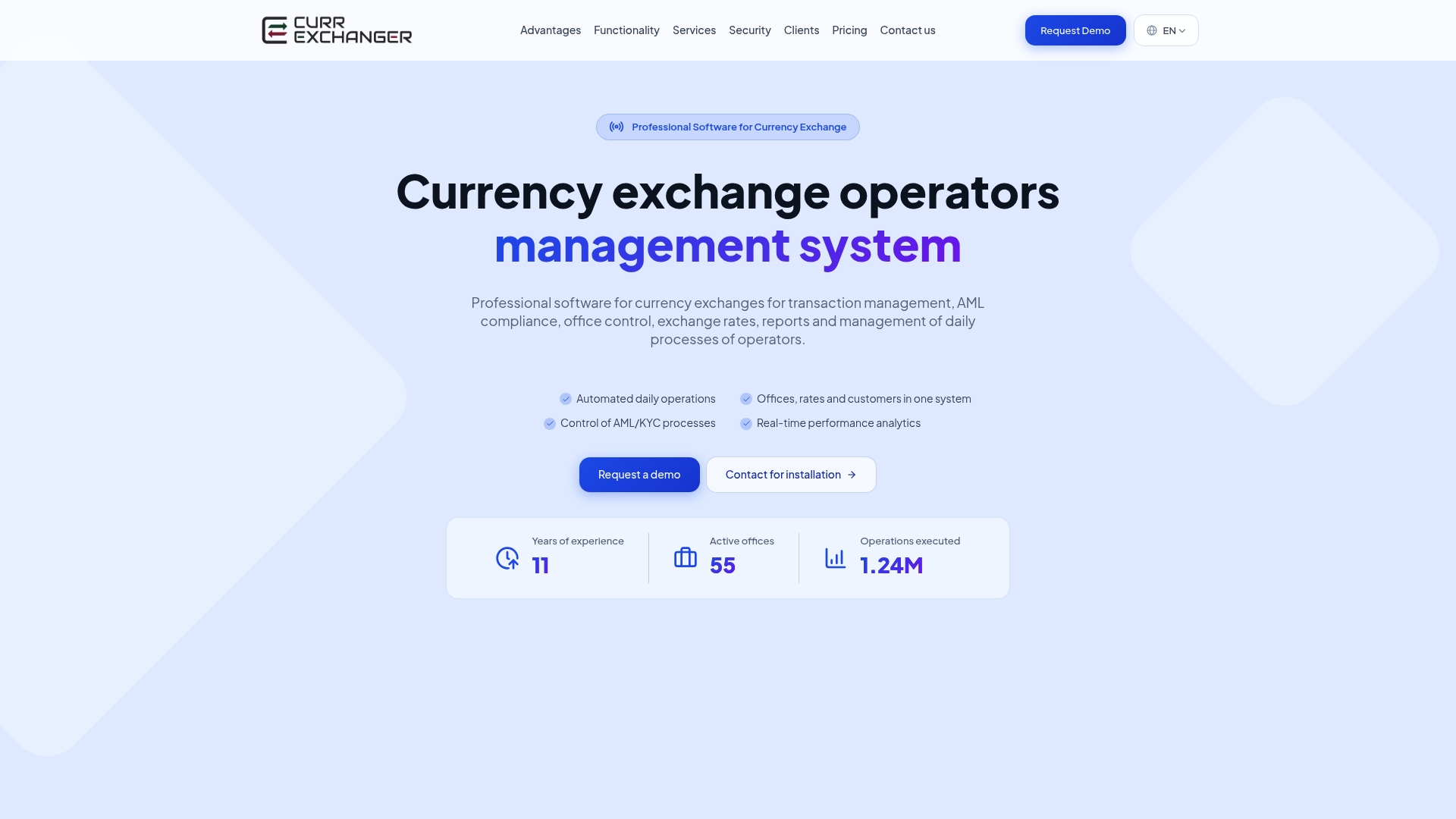
The platform consolidates transaction logs, exchange rate data, cash inventory, and compliance records into a single operational view across all branches. Real-time dashboards surface cash float levels, transaction volumes, and compliance alerts without manual data pulls. Row-level security keeps each branch's data isolated. AML/KYC workflows are integrated, not bolted on. API connectivity covers accounting systems, bank feeds, and external AML/KYC providers — the integrations that matter most for currency exchange management.
For Central European operators, Currexchanger's native support for multi-branch compliance workflows and audit trail requirements removes the localization risk that trips up generic platforms. You get pre-built branch KPI templates, MFA, detailed activity logs, and IP restrictions out of the box.
Book a demo to see the cross-branch dashboard and audit workbook live — or request a pilot scoped to your largest branch first.
Sources
- Branch Analytics Software for Banks & Credit Unions | FMSI
- Branch Audit Management Software For Bulletproof Audits | Pinpoint Global
- Powerbi
FAQ
What are the basic reporting tools for branch managers?
Branch managers typically rely on dashboards, scheduled reports, alerting systems, and audit trail modules. A centralized BI platform that consolidates transaction logs, cash positions, and CRM data covers all four functions in one system.
What key metrics should a branch manager track daily?
Transaction volume, cash float levels per currency, teller error rates, and any AML threshold alerts are the daily operational KPIs that require same-day attention. Weekly and monthly metrics like gross margin and audit findings run on a slower cadence.
Who does a branch manager report to, and what do they report?
Branch managers typically report to a regional or network manager. They report on branch P&L, transaction volumes, compliance status, cash positions, and staffing efficiency — the same metrics a good branch management dashboard surfaces automatically.
What are the most widely used reporting tools for financial branch networks?
Microsoft Power BI is widely deployed for general BI and dashboarding, including on-premises via Power BI Report Server where data residency is required. For currency exchange and AML-regulated branch networks, purpose-built platforms like Currexchanger provide the compliance workflows and transaction-level detail that generic BI tools require significant customization to match.
How long does it take to implement a branch reporting platform?
A realistic timeline runs 13–21 weeks from discovery through full rollout, with a 4–6 week pilot on a single branch before network-wide deployment. Data cleansing and localization for Central European fiscal requirements are the most common causes of delays.